%25202-127x128.png&w=256&q=75)
Industry Trends
ChatGPT Is Now a User Acquisition Channel — What Mobile Game Studios Should Know
AppsFlyer has expanded its attribution tools to cover ChatGPT. Its ChatGPT Ads integration, built on OpenAI's Conversions API, tracks app installs, re-engagements and in-app events driven by ads in ChatGPT, with no extra engineering work; Adjust offers a similar integration. AppsFlyer has also added what it calls answer engine optimization attribution, which measures users who discover an app through organic answers in eight AI assistants, including ChatGPT, Claude, Perplexity, Gemini, Copilot, Grok, DeepSeek and Manus. That matters because measurement is what turns an ad surface into a user acquisition channel: studios can finally see what ChatGPT traffic actually produces.
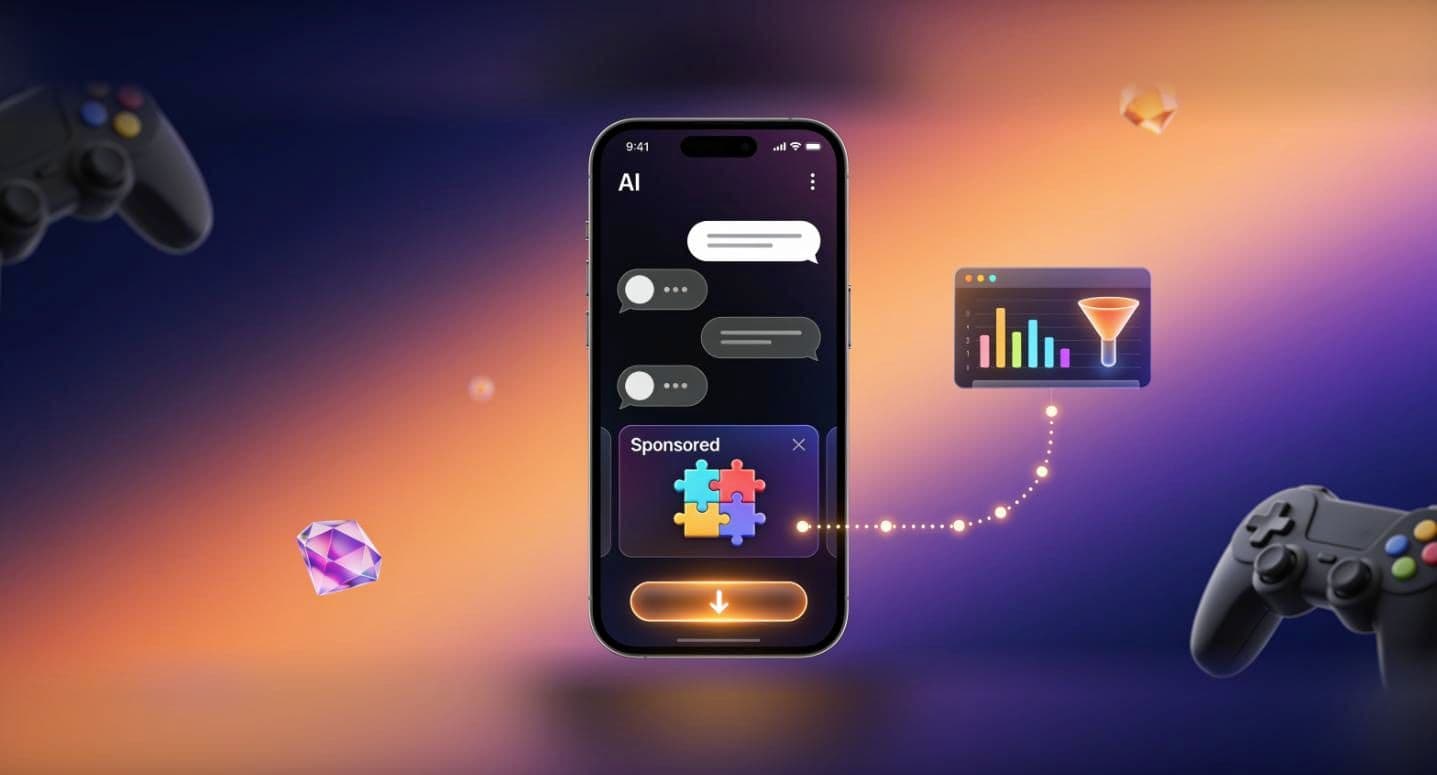
OpenAI began testing ads in ChatGPT in the US on February 9. Ads appear below the end of a response, labeled as sponsored and visually separated from the answer, and only for users on the Free and Go plans — Plus, Pro and business accounts don't see them. OpenAI says it doesn't show ads to accounts identified as belonging to users under 18, and ads aren't eligible to appear near sensitive topics such as health, mental health or politics. Advertisers get aggregate performance data such as impressions and clicks, not access to anyone's chats.
India is where this gets interesting for studios like ours. ChatGPT ads began rolling out in India at the end of August, self-serve Ads Manager access opened on September 4, and the reported minimum daily budget is Rs 725. India is ChatGPT's second-largest market, with more than 100 million weekly users as of February. That is a lot of intent-rich traffic at an entry price a small studio can actually test with.
The limits are real, though. On iOS, attribution still runs through SKAdNetwork's coarse, delayed data; on Android, Google Play's install referrer makes click-to-install tracking workable, if imperfect. The under-18 exclusion matters for casual games with young audiences. And ChatGPT's ad units sit under an answer to something the user asked — say, a request for good offline puzzle games — rather than interrupting play the way most game UA formats do, so creatives need rethinking. The organic side may matter just as much: if assistants are already recommending games, how your store listing and website describe your game now shapes what they say.
For a small, self-publishing studio like ours, the sensible move is a measured test, not a budget shift: an Android-first campaign with a hard daily cap, attribution in place before the first rupee is spent, and results judged on retention and revenue per user rather than raw installs. Studios already on AppsFlyer get the organic AI-referral tracking at no extra cost — re-engagement attribution needs SDK 6.12.1 or later — so it's worth checking whether assistants are already sending players your way. Search and social took years to become dependable UA channels; ChatGPT is early, but it is now measurable.