%25202-127x128.png&w=256&q=75)
Industry Trends
The Casual Games Market Just Split in Two: Why Hybrid-Casual Is Pulling Ahead
Casual mobile games had a rough 2025 on paper. In-app revenue across the category grew just 1.3% to $81.75 billion, while downloads fell 7.2% to 50.4 billion. The first half of 2026 looks worse at first glance: spending down 2% to about $40 billion, downloads down almost 12%. But that headline number hides a split that matters a lot more than the total.
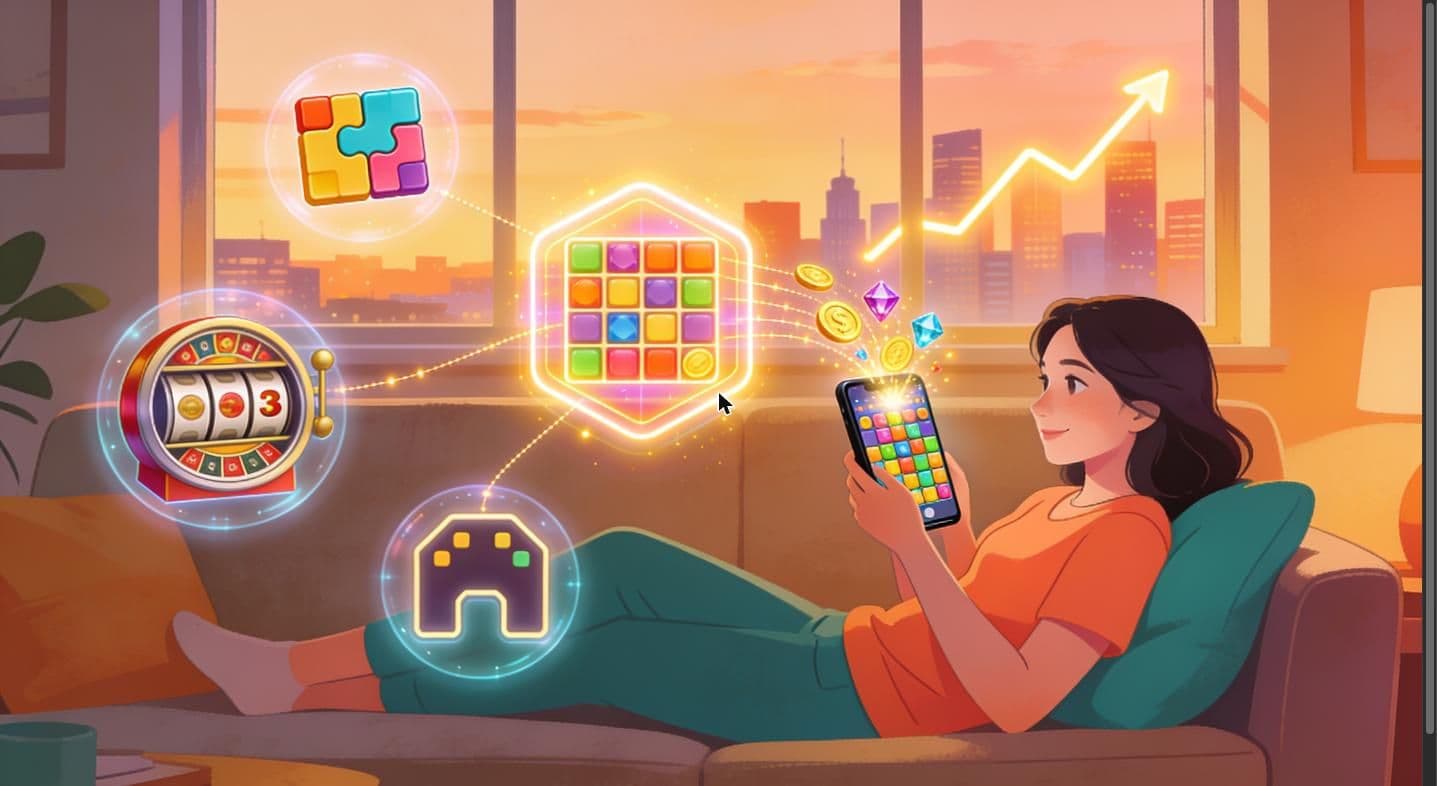
One segment of casual gaming is not just growing, it is pulling away from everything else: hybrid-casual. These are games with the light, instantly-readable mechanics of a hypercasual title, but with a meta layer bolted on, a home to decorate, a story to unlock, a board to expand, that gives players a reason to keep opening the app and a reason to pay. Hybrid-casual in-app revenue grew 20% in 2025 to $4.2 billion and is up another 23% in the first half of 2026, to roughly $2.4 billion. It is the only casual segment growing revenue in both periods, and the top ten titles in the category posted year-over-year IAP growth between 67% and 100%.
The scale some of these games have reached in a short time is worth sitting with. Pixel Flow pulled in about $125 million in in-app revenue in under a year, and Scopely paid roughly $1 billion for its studio, Loom Games, in February. Color Block Jam earned $42 million and 21.8 million installs in a single quarter. Gossip Harbor made more than $100 million in one month this past March. Tasty Travels brought in $127 million in the first half of 2026 alone. These are not niche hits. They sit alongside Royal Match, which has passed $500 million, and Monopoly Go at $431 million.
Hypercasual has not disappeared, but it has changed shape. Pure ad-only games struggled as user acquisition costs climbed faster than ad revenue could cover, so studios started layering in-app purchases on top of the ad model instead of choosing one or the other. The report we have been reading on this puts it plainly: leading hypercasual titles are now earning roughly three times more per month than they did a year ago, largely because they stopped relying on ads alone. Block Blast is the clearest example, still built around a dead-simple block-fitting loop, but now generating $127 million in ad revenue between January and May of this year through sheer volume and smart monetization layering.
Traditional casual, the older match-3 and puzzle games with neither the volume of hypercasual nor the meta depth of hybrid-casual, is the segment losing ground. That is not a comment on the genre. It is a comment on games that never added a reason to stay. Match-3 and block puzzles are not going away, Royal Match alone proves that. What is disappearing is tolerance for a puzzle game that is only a puzzle game.
There is a geography to this too. North America grew 9% and Europe grew 14% in the same window, while Asia was down 3%. Growth is not evenly spread, and neither is where the hybrid-casual model is landing hardest.
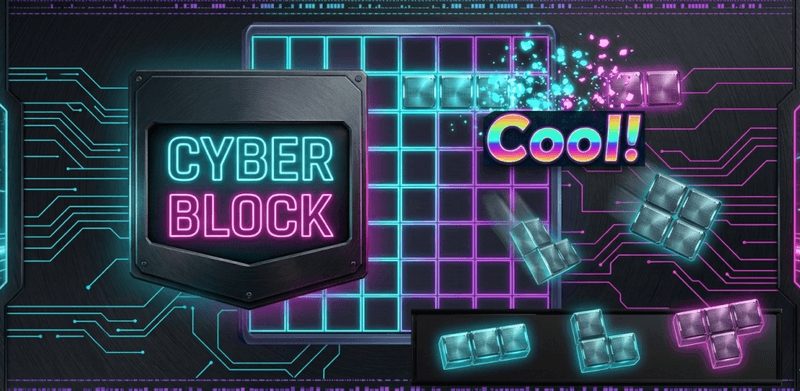
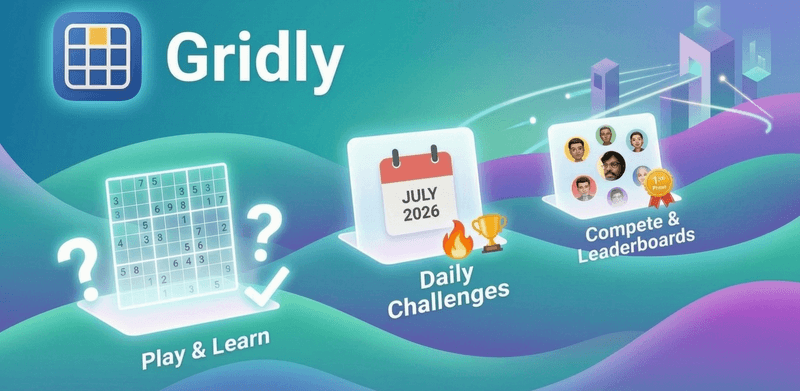
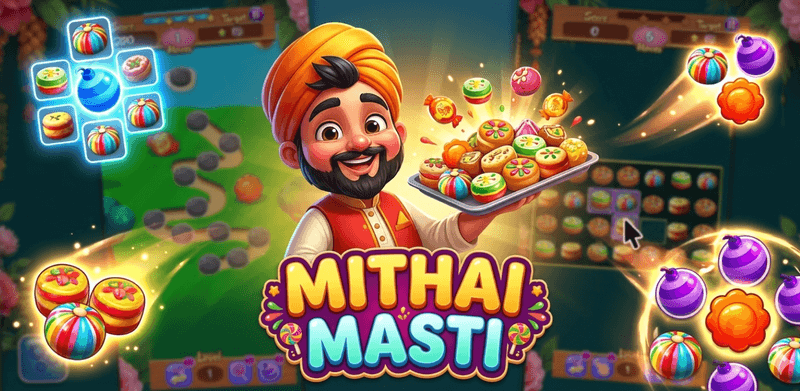
We build puzzle games. Cyber Block Puzzle is a block-fitting game in the same family as Color Block Jam and Block Blast. Gridly and Mithai Masti are built on the same instinct, a simple, satisfying core loop that anyone can pick up in five seconds. The lesson from this data is not that our core loops are wrong. It is that the core loop is table stakes now, and the studios pulling ahead are the ones that gave players something to build, decorate, or come back to beyond the next match. That is the direction we are pushing our own games in, and we will be talking more about what that looks like as it ships.
If you have played any of our games and felt like something was missing between matches, that instinct was probably right. We are listening.